
Build Your Own SaaS or Buy Off the Shelf? How to Decide and Scope an MVP
Should you build custom software or buy an existing tool? Learn when each makes sense, the hidden costs on both sides, and how to scope an MVP that doesn
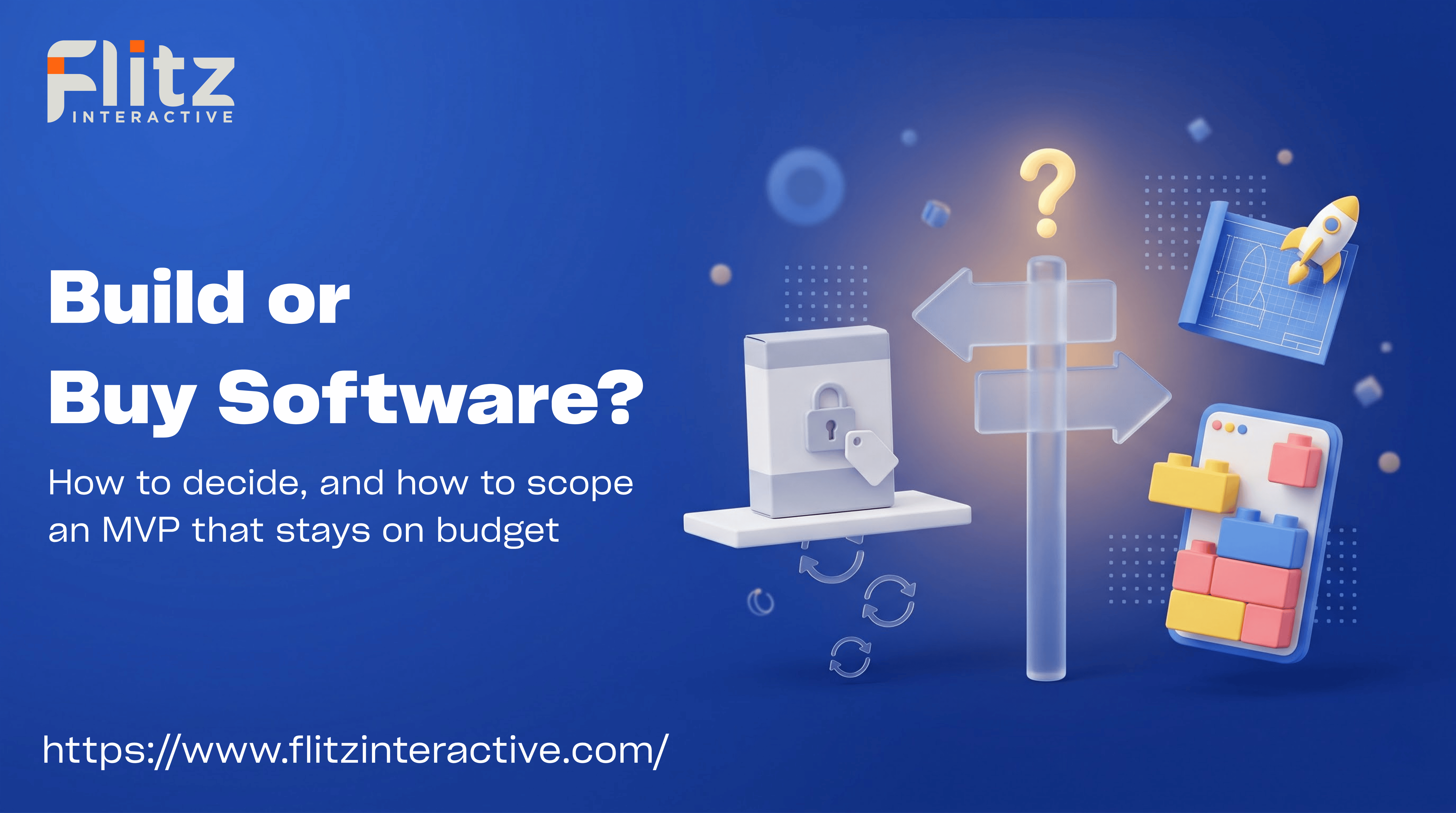


Build vs Buy: The Question Behind Every Software Decision
Sooner or later, almost every growing business hits the same question: do we buy an existing tool, or build our own?
It sounds like a technology question, but it's really a business one. The right answer depends on what makes your company different, how fast you need to move, and how much ongoing responsibility you're willing to take on.
In this post, we'll look at when buying makes sense, when building makes sense, the hidden costs on both sides, and how to scope a first version that doesn't grow out of control.
First, Ask What You Are Really Trying to Do
"We want to build a SaaS product" can mean very different things:
- Solve your own problem - You need software to run your business better
- Sell software to others - You see a market and want to launch a product
- Both - You solve your own problem first, then turn the solution into a product
If you only need to solve your own problem, buying or customizing is usually the faster path. If you want to sell software, you will almost certainly need to build, because the product itself is your business.
When Buying Off the Shelf Makes Sense
Existing software is a strong choice when:
- Your process is standard - Accounting, basic CRM, email, and project tracking work the same way in most companies
- You need to start quickly - Setup takes days or weeks, not months
- The software isn't your edge - Nobody chooses you because of how you manage invoices
- You don't want to maintain technology - The vendor handles hosting, updates, and security
- Your budget for the first year is limited - The upfront cost is usually lower
Don't build what you can buy cheaply and use as it comes. That is time and money better spent on your actual business.
When Building Your Own Makes Sense
Custom software is worth considering when:
- Your workflow is your competitive advantage - The way you operate is what customers pay for
- You plan to sell it as a product - The software is the business
- Existing tools force painful compromises - Your team works around the software every day
- Costs grow badly as you scale - Per-user or per-feature pricing becomes a large and growing expense
- You need control - Over your data, your features, your roadmap, and how it is hosted
- You need to connect many systems in a specific way - Off-the-shelf integrations don't fit
If several of these apply, the case for building gets stronger.
The Hidden Costs on Both Sides
Buying
- Per-user and per-module fees that rise as you grow
- Workarounds - Spreadsheets and manual steps around what the tool can't do
- Limits and lock-in - Hard to leave once your data and habits are inside
- Features you pay for but don't use
- A roadmap you don't control
Building
- Development time - Almost always longer than the first estimate
- Ongoing maintenance - Bug fixes, updates, and changes never stop
- Hosting and infrastructure - Servers, backups, monitoring, and costs that grow with usage
- Security and compliance - Your responsibility, not a vendor's
- Support - Someone has to answer questions and fix problems
- The "second half" - Login, billing, onboarding, admin tools, and emails often take as long as the main feature
A fair comparison counts all of these costs over several years, not only the launch cost.
A Middle Path: Customize a Platform
Build or buy isn't always a strict choice. A third option often fits better:
- Start with a platform or an existing open-source framework and customize it to your process
- Use ready-made parts for the standard pieces like users, permissions, and accounting
- Build custom only where it matters - The parts that make your business different
This approach can get you to a working product much faster than starting from a blank page, while still giving you control over what counts. For example, businesses with unusual processes often start with an extensible ERP framework like Frappe/ERPNext and build their special features on top.
How to Scope an MVP That Doesn't Balloon
If you do decide to build, the first version matters more than anything else. An MVP (minimum viable product) is the smallest version that can prove whether the idea works.
1. Define One Problem and One User
Pick the single most important problem for one type of user. A product that tries to serve everyone in the first version usually serves no one well.
2. Sort Every Feature
Write down everything you can think of, then sort each item:
- Must-have - The product doesn't work without it
- Nice-to-have - Useful, but it can wait
- Later - Ideas for after launch
Keep only the must-haves in version one.
3. Launch the Smallest Useful Version
Ask: what is the least we can build that lets a real user complete the main task? Launch that, and learn from real use.
4. Set a Budget and a Timeline
Decide in advance how much time and money version one gets. If new requests appear, something else has to leave, or the budget has to be changed on purpose.
5. Plan for Feedback
Choose a small group of real users, talk to them early, and be ready to change direction based on what you hear.
Common Budget Traps
- Adding features before anyone has used the product
- Skipping user feedback and guessing what people want
- Underestimating maintenance after launch - Software needs ongoing care
- Leaving admin, billing, and onboarding for last - They are real work
- Building for scale you don't have yet - Handle ten customers well before planning for ten thousand
- No clear owner - Nobody with authority to say no to new requests
- Treating launch as the finish line - It's the starting line
A Decision Checklist
Answer these honestly:
- Is this software part of what makes our business different?
- Do we plan to sell it to others?
- Have we tried existing tools, and do they truly not fit?
- Can we afford the build and the ongoing maintenance?
- Do we know the one problem and the one user for version one?
- Could a customized platform get us there faster?
- Do we have someone who owns the product and the decisions?
If most answers lean toward "yes, it's our edge, and we can maintain it," building is worth serious thought. If not, buying or customizing is probably the better path.
Who Should Use This Guide?
- Founders considering a SaaS product
- Business owners frustrated with the tools they have
- Operations leaders weighing custom software against packaged tools
- Teams planning a first version and worried about scope
Conclusion
Neither building nor buying is always right. Buy when your needs are standard and speed matters. Build when the software is your edge or your product. Consider a customized platform when you want control without starting from zero. And whichever way you go, keep the first version small.
At Flitz Interactive, we help founders and businesses decide, scope, and build SaaS products and custom systems, from the first MVP through launch and growth. If you're weighing the options, we'd be happy to talk it through.